To Top
Here’s my page from the Stanford Graphic Novel Project’s latest book, based on the amazing true story of Tsutomu Yamaguchi, one of the few survivors of both of the atomic bombs that were dropped on Japan in the final days of WW2. Yamaguchi was actually at ground zero (within 3km of the blast’s epicentre) for both the Hiroshima and Nagasaki detonations, and his testimony as to the after-effects and devasatation wrought by the blasts is truly unique. The above page is thanks to Topher, one of head thumbnailers and project managers, who gave me the Chris Ware-esque thumbnailed blueprint. Although I baulked at first, it was actually a lot of fun to pencil and I think the multiple actions contrasted with the near-silence of the page works especially well. More on the class’s amazing journey from conceiving of the graphic novel to getting it off to the printers (fingers crossed) within 6 months to follow next week. Once it’s done, that is. Here’s my original post about the project.
At last a full reply (at the very bottom of this post) from Chris Bryant, the Minister responsible for the Overseas Territories on the subject of the Chagossians’ right to return. To read my comic on the issue, go here. Meanwhile, Chris Ware, the visionary comics artist behind Jimmy Corrigan: the Smartest Kid on Earth is in the news for his recent prank cover art for the new Fortune 500 list, which is surprisingly pointed for a graphic novelist who usually steers clear of politics: here are two highlights, including Guantanamo prisoners and an ‘exploitation 
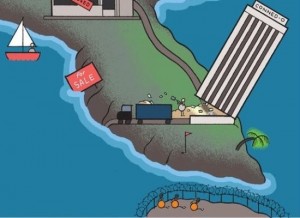 factory’. For the full story and the entire cover art, go here. As always, the piece has attracted its fair share of fans and critics, the latter of whom rails:
“My main objection is that this kind of smarmy, artsy-fartsy assertion of intellectual/political superiority only reaches the people who already know about and are convinced of corruption in the American economy. What’s the point if the people who need to make changes are only offended or don’t even “get it”? Mr. Ware would do better to donate half of what must be a lucrative income to charity, write letters, hold a sign up in front of a capitol building, and or spend his lunch hour serving in a soup kitchen.”
Interesting point, most deflated in my opinion by the flawed suggestions (let’s not even go into the ‘lucrative income’ part) for enacting grass-roots change, but it does beg the question: is laughter the goal of satire, even at the expense of informing a
viewer? It reminded me of a recent piece in the Guardian about the golden era of British TV satire, spearheaded by Spitting Image (see left for a quick intro to the show). Again though, this sort of entertainment could only appeal to those already familiar with the political hot topics of the day, and could arguably be said to only flatter the egos of the same people it sighted in its satirical crosshairs (see 4mins 10 secs). Can visual news media be informative/educational AND entertaining/humorous? Leave your comments/link suggestions below.
 .
.