The latest Archcomix newsletter is out now: click here to read it online or . Find out more about the Global Forum on Human Trafficking from this set of live sketches, visit the updated trafficking page or check out some of the new pages from the tabs above.
New visitors, welcome! Be sure to browse the comics using the tabs at the top of the page.
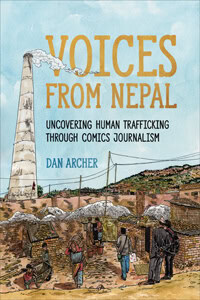
I will be attending the Global Forum on Human Trafficking in Sunnyvale, CA today and tomorrow to meet like-minded abolitionists and discuss new ways of combatting human trafficking (through visual storytelling, in my case). If you’re a new visitor to the site, check out my trafficking page for information on my Borderland comic, which translated the voices of several victims of human trafficking in Eastern Europe into comics format. Also, be sure to check out the latest details of my new storytelling project, focusing on trafficking in India and Nepal, which will take place in April/May of next year at my new site Graphic Voices.
Click here to read my latest comics experiment, gleaned from a series of interviews I did at the Occupy Oakland protest on Thursday night. Something of a change in how I normally put work together, I skipped thumbnailing and dived straight into transcribing the interviews to let the subjects speak for themselves. I sprinkled in some interactivity too to keep/force readers to engage with it – and added some audio into the mix while I was at it. See what you think – it’s also been posted on this occupy portraits site too.
You’ll also notice that I’ve added a Multimedia page along the top, where you’ll find videos, animations, audio recordings and links to my most recent interactive visual storytelling experiments.
Ok, so it’s been a while since my last update – I can happily report it’s because I’ve been juggling deadlines for the past few weeks. That, and being at San Franciso’s Alternative Press Expo and starting a new semester back at Stanford teaching the graphic novel project. For your aural delight here is the recording from the panel I moderated at APE on “Exploring Comics Journalism”. Thanks to Matt Bors, Susie Cagle and Jen Sorensen for their contributions.
[soundcloud url=”http://api.soundcloud.com/tracks/25001907″]
As ever, the fruits of my recent labours will be posted soon, but you’ll have to wait a little longer for now. What better opportunity could you want for perusing the archived non-fiction comics waiting for you behind the tabs at the top of the screen? Hover over them and then choose a comic to read from the drop-down menu.
In the meantime, above are some panels from my current project in progress on Alcatraz – check out the Alcatraz page for more details and the story behind them.
Pardon the brief hiatus, but I’ve spent the last little while with my head down working through the historical record with Paddy Hirsch, Senior Editor at Marketplace, on ways to make the financial crisis easier to understand and accessible to the general (ie. non-economically-minded) public. The fruits of our labour are now up online at Marketplace to coincide with the 3rd anniversary of Lehman Bros’ collapse – check out the 2 minute animation below and the rest of the comic here.
My latest interactive comic is now live at Poynter.org – click here to read it in all of its interactive glory.
The eagle-eyed amongst you will also notice that my latest comic on the Hard Hat Riots of 1970 is now available for pre-order via the widget on the right-hand sidebar.
Here’s a link to another of my forrays into interactive flash design, featuring background info and interviews with Bhutanese refugees in Oakland. Madhu Acharya and I put the series of videos and audio together towards the tail end of the Knight fellowship, and the story went live this week on the Penipress website, which also feeds SFGate and the Bay Citizen. The above sketches were done in situ as I was wrestling with the idea of combining direct reporting with post-production work, sort of like the Bo Seremsky piece I posted a few weeks back.
As I mentioned in this previous post, about a month ago I spent a week in the woods outside LA (near Palm Springs), 6000 feet up a mountain, teaching a course on graphic novel writing. The adult students were amazingly dedicated and came on leaps and bounds in their visual storytelling skills, as you can see from the above tiers by Claudia Bear. Click here to visit her new site and read the rest of her comic. More from the other students to come.
In other news: The first mini-review of Yiddishkeit, featuring the 55 page comic I did with Harvey Pekar, is up online here. I’ll post more about it in the Non-fiction page (click on the above tab to access it normally). Here’s the official book page at Abrams if you’re interested in reading about the other collaborators, amongst them the mighty Peter Kuper and Spain Rodriguez.
Comics journalism is in the headlines more than ever these days: check out these two articles, one from The Atlantic (with a list of must-read titles), the other, from Truthout by Adam Bessie, features myself, Ted Rall, Sarah Glidden, Matt Bors and of course Joe Sacco in a round-up of the form’s movers and shakers.
After a week or two off (imagine that!), allow me to showcase some of the incredible talents from the two classes I taught directly after my knight fellowship ended. For more on the classes, click here to read my previous post. The first featured creators aged 14-17 from Stanford’s EPGY program, which ran for 3 weeks, during which time I crammed as much graphic novel know-how into their porous brains as I could. Like any of the workshops I teach, we covered the creative process (writing, thumbnailing, pencilling, inking, scanning, photoshop, indesign) with the invaluable addition of also critically analysing some stand-out examples of the form. This being me I put a heavy slant on non-fiction visual storytelling, meaning we covered Persepolis by Marjane Satrapi, Maus by Art Spiegelman, The Photographer by Guibert/Lefevre, Footnotes in Gaza by Joe Sacco, Wordless woodcuts from Franz Masereel, Lynd Ward and Giacomo Patri, as well as Craig Thompson’s Blankets and Douglas Wolk’s How to Read Graphic Novels.
For more samples of the students’ final artwork, scroll down.
Where has he disappeared off to? I hear you ask, dear reader. Well, since the Knight journalism fellowship finished I’ve been teaching back to back graphic novel writing classes, first at Stanford’s EPGY Summer program, and now currently to a group of mature students in the heart of the rural hinterland that is Idyllwild College. It’s 6000 feet up a mountain, about 2 hours east of LA, and I’ve reverted back to a dial-up modem to send this missive from my little cabin in the wilderness.
Both the courses have gone extremely well, and it’s always a pleasure to spread the good word (and image, wah wah) of visual storytelling to a larger audience across a broad age group. The current Idyllwild class is focusing on non-fiction comics, which I thought would be easier to structure a tentative first effort around, given the skeletal outline of facts/evidence etc. Topics range from: shootings in the wake of Hurricane Katrina; escaping from North Korea; the burgeoning Lion fish population in the Atlantic and the Armenian genocide. I’ll post some sample panels forthwith. For those of you that missed it, the tier above is taken from my latest interactive piece on the Nisoor Square shootings, published on Cartoon movement last month. Click here to try it out.
Be sure to check out the news below the fold: I stumbled across a great comic on the Canadian mining corporation Goldcorp and their struggle to uproot indigenous communities to access gold mines in Guatemala. Not to mention the toxic effects of their mining process on the unfortunate families who are unable to move away from the site of the cyanide-oozing mines. In the interests of impartiality (ahem) it should be duly noted that “over 50 percent of the 1,900 people working at the mine were local residents at their time of hiring, and 98 percent were Guatemalan residents. In 2008, the Marlin operation spent more than $90 million in Guatemala on supplies and services, and paid over $20 million in taxes”. See for yourself here. Though the integral inclusion of cyanide in the gold extraction process has to raise a few eyebrows given the outbreak of skin diseases amongst the local population: [thanks to Chris Van den Ven for the summary below]
Cyanide leaching…uses a cyanide solution to dissolve gold from host rocks for later precipitation. Rock is removed from the ground with explosives. After the ore has been excavated, it is brought to a grinding mill, where the ore is crushed into sand or smaller sized grains. Next, it is transported to the leaching plant where the ore is mixed with the cyanide solution. The cyanide solution dissolves the gold from the crushed ore. Next, the gold-bearing solution is collected. Finally, the gold is precipitated out of solution.